Friday, July 1, 2022

Dutch central bank apologises for historic links to slave trade


Dutch central bank apologises for historic links to slave trade

De Nederlandsche Bank announces a series of measures aimed at reducing ‘negative effects of 19th-century slavery’.

President of the Dutch Central Bank Klaas Knot speaks
Klaas Knot speaks at the Group of 20 high-level seminar in Japan

The apology came on Friday at an event on the country’s national day marking the Dutch abolishment of slavery and followed similar moves in recent years from municipal authorities in the main Dutch cities of Amsterdam, Rotterdam and Utrecht.

De Nederlandsche Bank has acknowledged that it was involved in the transatlantic slave trade between 1814 and 1863 and even paid compensation to plantation owners when the Netherlands abolished slavery, including to members of the central bank’s board at the time.

Klaas Knot, the president of the bank, told a gathering in Amsterdam: “Today, on behalf of De Nederlandsche Bank, I apologise for these reprehensible facts.”

“I apologise to all those who, because of the personal choices of many, including my predecessors, were reduced to the colour of their skin,” he said.

The bank announced a series of measures including boosting diversity and inclusiveness in its ranks and setting up a five-million-euro ($5.2m) fund for projects aimed at reducing “contemporary negative effects of nineteenth-century slavery”.

Knot’s apology came exactly a year after Amsterdam Mayor Femke Halsema apologised for the Dutch capital’s role in the slave trade.

In April, Dutch bank ABN AMRO also apologised for historic links to slavery in the 18th and 19th centuries.
Saturday, June 25, 2022

Bondholder sues Sri Lanka in US court


Bondholder sues Sri Lanka in US court

In its lawsuit, the bondholder said the default is being ‘orchestrated by officials at the highest levels of government’.

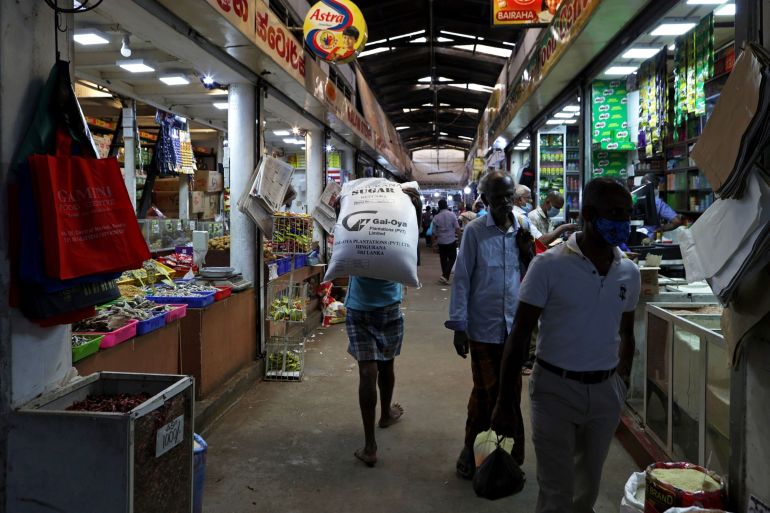
A worker carries a sack of sugar in a market in Kandy, Sri Lanka
Sri Lanka fell into default in May for the first time in its history since independence
Sri Lanka was sued in the US by a bondholder after the South Asian nation defaulted on its debt for the first time in history while struggling to stop an economic meltdown.

Hamilton Reserve Bank Ltd., which holds more than $250 million of Sri Lanka’s 5.875% International Sovereign Bonds due July 25, filed the suit Tuesday in a New York federal court seeking full payment of principal and interest.

Sri Lanka, an island nation off the southern tip of India, fell into default in May after the expiry of a 30-day grace period for missed interest payments on two of its sovereign bonds. It was the first sovereign debt default by the country since it gained independence from Britain in 1948.

Hamilton Reserve, based in St. Kitts & Nevis, said in the lawsuit that the default is being “orchestrated by officials at the highest levels of government,” including the ruling Rajapaksa family, and accused Sri Lanka of excluding bonds held by domestic banks and other interested parties from an announced debt restructuring.

“As a result, these favored Sri Lankan parties stand to be paid principal and interest in full, while the Bonds — which are also broadly held by US retirement systems including Fidelity Investments, BlackRock, T. Rowe Price, Lord Abbett, JPMorgan, PIMCO, Neuberger Berman and other US investors — remain indefinitely in default and unpaid, causing American retirees tremendous suffering from potentially massive losses of up to 80% of their original investment value,” lawyers for Hamilton Reserve said in their complaint.

A group of Sri Lanka’s largest creditors, including Pacific Investment Management Co., T. Rowe Price Group Inc. and BlackRock Inc., has been set up and restructuring talks are expected to start soon, Bloomberg reported, citing people familiar with the arrangement who requested anonymity ahead of a formal announcement.

The island nation is grappling with a worsening humanitarian crisis after it ran out of dollars to purchase imported food and fuel, pushing inflation to 40% and forcing the default. Sri Lanka needs $5 billion to ensure “daily lives are not disrupted,” and a further $1 billion to strengthen the rupee, Prime Minister Ranil Wickremesinghe told parliament earlier this month.

Sri Lanka hired Lazard Ltd. and Clifford Chance LLP in May to serve as financial and legal advisors on debt restructuring as the country seeks a bailout from the International Monetary Fund.

Sri Lankan authorities on Monday began talks with the IMF, working toward an agreement that could offer creditors enough comfort to lend fresh funds to the bankrupt nation that’s seeking $6 billion in coming months.

The case is Hamilton Reserve v. Sri Lanka, 22-cv-5199, US District Court, Southern District of New York (Manhattan).