Sunday, June 5, 2022

Earth’s climate


Earth’s CO2 level passes a new climate milestone

The atmospheric CO2 level in May was 50 percent higher than during the pre-industrial era, raising fears about climate change.
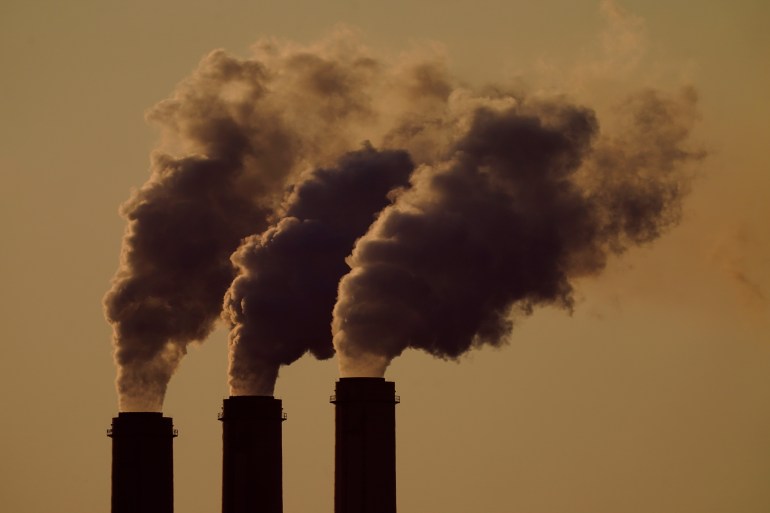
Emissions rise from the smokestacks at the Jeffrey Energy Center coal power plant in Kansas.
CO2 is a greenhouse gas that traps heat, gradually causing global warming 

The amount of carbon dioxide in the atmosphere passed the threshold of 420 parts per million (ppm), the National Oceanic and Atmospheric Administration (NOAA) said. PPM is a unit of measurement used to quantify pollution in the atmosphere.

Global warming caused by humans, particularly through the production of electricity using fossil fuels, transport, the production of cement, or even deforestation, is responsible for the new high, the NOAA said.

CO2 is a greenhouse gas that traps heat, gradually causing global warming. It remains in the atmosphere and oceans for thousands of years.

Its warming effect is already causing dramatic consequences, noted NOAA, including the multiplication of heatwaves, droughts, fires or floods.

This 2019 photo provided by NOAA shows the Mauna Loa Atmospheric Baseline Observatory in Hawaii
This 2019 photo provided by NOAA shows the Mauna Loa atmospheric baseline observatory, high atop Hawaii’s largest mountain, which samples well-mixed background air free of local pollution 

“Carbon dioxide is at levels our species has never experienced before – this is not new,” said Pieter Tans, a scientist with the Global Monitoring Laboratory at NOAA.

“We have known about this for half a century, and have failed to do anything meaningful about it. What’s it going to take for us to wake up?”

Before the Industrial Revolution

The measurements are taken at the Mauna Loa observatory in Hawaii, ideally located high on a volcano, which allows it to escape the possible influence of local pollution.

Before the Industrial Revolution, levels of CO2 held steady at about 280ppm, a level maintained for approximately 6,000 years of human civilisation that preceded industrialisation, according to NOAA.

The level now is comparable to what it was between 4.1 and 4.5 million years ago, when CO2 levels were near or above 400ppm, the NOAA said.

At that time, sea levels were between five and 25 metres higher than now, high enough to submerge many of today’s major cities. Large forests also occupied parts of the Arctic, according to studies.

 “The science is irrefutable: humans are altering our climate in ways that our economy and our infrastructure must adapt to,” NOAA Administrator Rick Spinrad was quoted as saying by the climate agency website.
Saturday, May 28, 2022

US, Netherlands


US, Netherlands call for action on decaying Yemeni supertanker

The two countries warn of potential economic, environmental and humanitarian effects if FSO Safer spills or explodes.

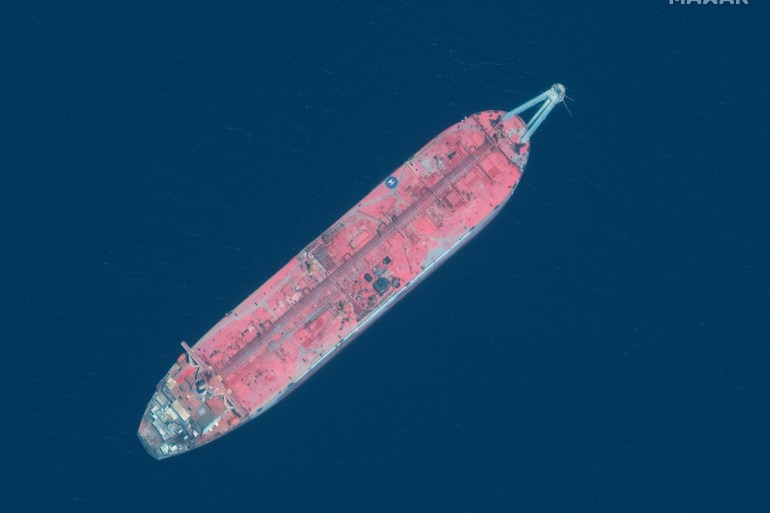
close up view of the FSO Safer oil tanker
A close-up view of the FSO Safer, June 19, 2020

The two countries issued a joint statement on Friday warning of the potential economic, environmental and humanitarian effects of an oil spill from FSO Safer, which they described as “decaying and unstable”.

“It could leak, spill, or explode at any time, severely disrupting shipping routes in the Gulf region and other industries across the Red Sea region, unleashing an environmental disaster, and worsening the humanitarian crisis in Yemen,” the statement said.

The supertanker has been called a “ticking timebomb” by experts and environmental advocates.

Last month, the United Nations unveiled a plan to offload the oil from the supertanker to a temporary vessel across four months.

“Both the FSO Safer and the temporary vessel would remain in place until all the oil is transferred to the permanent replacement vessel,” the plan reads. “The FSO Safer would then be towed to a yard and sold for salvage.”

The UN said the plan has the backing of the internationally recognised Yemeni government in Aden, and a “memorandum of understanding has been signed” with the Houthi rebels, who control the area where the FSO Safer is located.

On Friday, the US and the Netherlands warned against delaying the plan.

“By October, high winds and volatile currents will make the UN operation more dangerous and increase the risk of the ship breaking apart. In the event of a spill, the cleanup alone is expected to cost $20 billion,” their joint statement read.

Overall funding also appears to be an issue. The scheme would cost $144m, including $80m for the initial emergency operation.

The Netherlands and the US called on governments and the private sector to help finance the effort.

“We urge public and private donors to consider generous contributions to help prevent a leak, spill, or explosion, whose effects would destroy livelihoods, tourism, and commerce in one of the world’s vital shipping lanes,” they said.

They added that a pledging event last month raised nearly half of the amount needed for the emergency operation, but “more is urgently needed to move forward”.

In addition to the environmental threat and danger to international shipping routes, a spill from the supertanker – located west of Ras Issa on the Red Sea – could close the nearby ports of Hodeidah and Saleef, disrupting the flow of vital goods to assistance-dependent Yemen, UN officials have warned.

The US and the Netherlands’ call for action comes amid UN efforts to renew a fragile truce that had brought a halt to the fighting in Yemen since early April. The temporary ceasefire is set to expire at the beginning of June.

“We have sought to consolidate and to reinforce the truce not only because it brings additional stability and security to the people of Yemen, but because it has very practical effects,” US Department of State spokesperson Ned Price said earlier this week.

“It has allowed humanitarian aid to reach individuals in parts of Yemen that have not been able to receive adequate aid for far too long.”